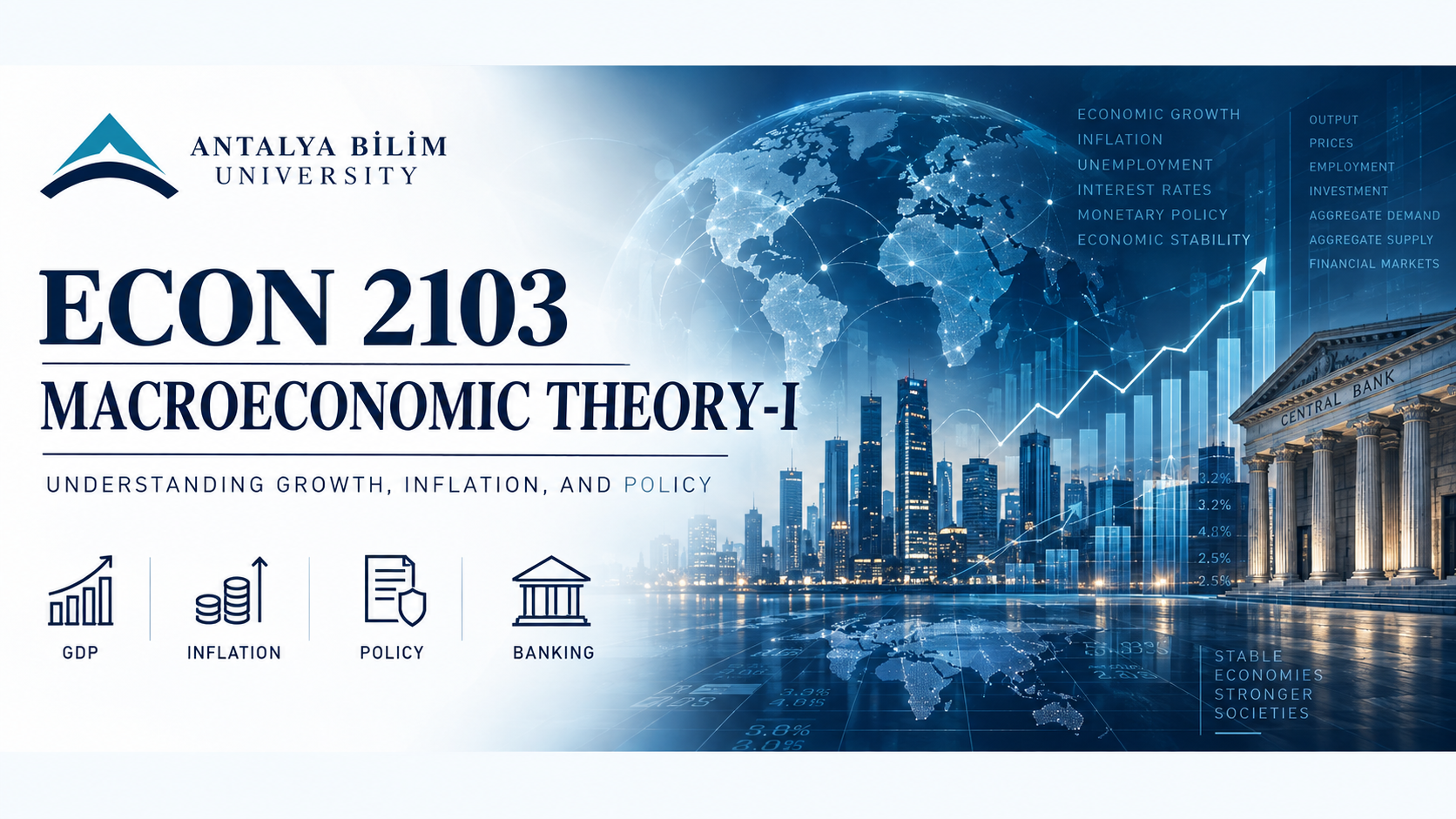
The course Macroeconomic Theory I (Macroeconomics I) is designed to provide students with a deep understanding of modern macroeconomic theory and its application to real-world economic policy-making. The primary objective of this course is to enhance students' ability to analyze and evaluate key macroeconomic issues that influence both short-term and long-term economic performance. By the end of this course, students will be equipped with the necessary tools to critically assess national economic policies and their impact on the broader economy.
Throughout the course, students will develop core analytical skills in macroeconomics, beginning with basic economic concepts and the fundamentals of supply and demand. The course will guide students through the measurement of key macroeconomic indicators such as GDP, unemployment, and inflation, providing a solid foundation for understanding the economic health of a nation. Students will explore the intricacies of savings, investment spending, and the financial system, gaining insight into how these elements contribute to economic growth and stability.
As the course progresses, students will delve into critical topics such as income and expenditure, aggregate demand and supply, and the role of fiscal and monetary policies in managing economic fluctuations. The course also covers the structure and function of money, banking, and the central bank, along with the complexities of open-economy macroeconomics, which explores the interconnectedness of domestic and international economies.
In addition to lectures, the course emphasizes active participation through in-class debates, allowing students to engage with the material and apply theoretical concepts to real-world scenarios. The course concludes with a comprehensive review, integrating macroeconomic theory with practical policy issues, ensuring that students are well-prepared to tackle the challenges of modern economic analysis in both academic and professional settings.
- Öğretmen: Kemal ERKİŞİ